Triple-A games are phenomenal when it comes to graphics, environments, sounds, and more. Nevertheless, they don’t trigger as many emotions as a random dark find at 11:55 PM that keeps you up til morning and changes your brain chemistry.
Let’s not waste your time, though. If you love high-quality visuals, epic fights, and stories that are easy to digest, then this list might be boring for you. We will be looking at projects that are as simple as Chicken Road casino games in design but as deep as Mariana Trench in narrative. And in case you really need that, read on!
3 Half-Life Mods That Give You Free Psychological Traumas
Old school gamers will instantly think of Cry of Fear and Grey. Both games were created by geniuses as mods for Half-Life and thus went live for $0.00—they are still free, of course. But also, there’s a third game that rarely gets mentioned.
#1 Cry of Fear
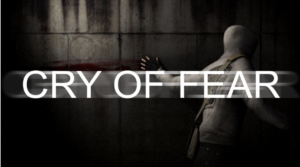
This legendary psychological survival horror game holds a unique place in gaming history. Originally released in 2012 as a total conversion mod, it later became a standalone free-to-play title on Steam in 2013. In 2026, it is still widely considered one of the most terrifying and atmospheric horror games EVER MADE.
The game follows Simon Henriksson, a 19-year-old living in Sweden. The story begins after Simon is struck by a car in a hit-and-run accident. He wakes up in a dark, distorted version of Stockholm, filled with grotesque monsters and mind-bending puzzles.
Without spoiling too much, the game is a deep dive into Simon’s mental health. The monsters, environments, and even the bosses are symbolic representations of his trauma, depression, and the literal and figurative “crippling” effects of his accident.
By the way, there are multiple endings! Your choices determine which of the FIVE distinct finales you receive.
#2 Grey

If Cry of Fear is the king of the Half-Life 1 horror scene, Grey is its darker, sleeker younger brother on the Half-Life 2 (Source) engine. Released in 2012 by the Deppresick Team, Grey shares a surprising amount of DNA with Cry of Fear—including the fact that both protagonists are voiced by the same actor (Stig Sydtangen)—but it leans much harder into the “Silent Hill” style of surrealism.
You play as Grey Anderson, a lonely, depressed man. After a violent incident at his job, Grey washes up in a bathroom and steps out into a city that has become completely empty—and eventually, nightmarish. The ending… It’s grounded. No spoilers, though.
Parallel to being sad as hell, the game is also quite hard because of…
- Scarcity: Ammo and health (bandages) are extremely rare. You are often encouraged to run rather than fight.
- The Flashlight: Unlike the infinite battery in many games, your flashlight in Grey is vital but limited, creating intense “darkness” segments.
- Hardcore Mode: Completing the game once unlocks a Hardcore mode that changes the maps and puzzles, leading to a secret “True Ending.”
#3 Alchemilla
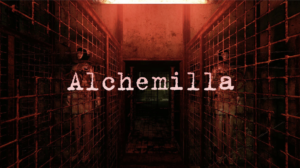
Silent Hill: Alchemilla (developed by the White Noise team) is often called the “ultimate tribute” to the original Team Silent games. While others are fast-paced, violence-heavy nightmares, Alchemilla (released in 2015) takes the opposite approach: it is a pure psychological… adventure.
The most striking thing about Alchemilla is that there is no combat. Instead, enjoy:
- Atmospheric Dread: You have no gun and no pipe; every noise is terrifying.
- The “Quest” Approach: The developers couldn’t find a way to implement a satisfying combat system in Source that felt like Silent Hill, so they leaned into the “Adventure/Puzzle” genre.
- Hardcore Puzzles: Unlike modern games that highlight objects, Alchemilla expects you to have a pen and paper next to you. You have to read notes, look at floor plans, and solve complex riddles.
Bonus: My House.wad, a Free Tragedy

MyHouse.wad (released in 2023) is a different beast entirely. It is a masterpiece of “meta-horror” and psychological storytelling built inside Doom II. It’s also an ARG (Alternate Reality Game) wrapped in a technical marvel that shouldn’t be possible on the Doom engine.
So, like the previous free games, it’s a mod. It was posted on the Doomworld forums by a user named Veddge. The backstory provided was that a childhood friend named Thomas had passed away, and Veddge found an old floppy disk containing a map Thomas had been working on—a replica of his own house. Veddge claimed he finished the map to honor his friend.
Included with the download is a journal (PDF) that documents Veddge’s descent into obsession and nightmares as he worked on the file. This narrative blurs the line between the game and reality.
The Gameplay: Impossible Spaces
At first, it looks like a normal, somewhat boring map of a suburban house. But as you play, the “Doom engine” starts to break:
- Non-Euclidean Geometry: You might enter a room, turn around, and find that the door has vanished or leads to a completely different part of the world.
- The Impossible Hallway: Directly inspired by the novel House of Leaves by Mark Z. Danielewski, you find closets and hallways that are physically longer than the house.
- The Layers: The game has multiple “layers” of reality. You might find yourself in a burned-down version of the house, a dream-like “liminal space” airport, or even the infamous Backrooms.
Cultural Impact
MyHouse.wad became a viral sensation because it perfectly captured the “Analog Horror” aesthetic and the feeling of “liminal spaces” (eerie, empty places that feel familiar yet wrong). It is widely regarded as one of the best pieces of horror media in recent years, despite being a mod for a 30-year-old game.
The Horror Persists—And We Get Epic Experiences
Playing these games might be a bit too much. In case you’re not a hardcore gamer, it will be best to watch streams. Nevertheless, it’s impossible to deny that these four are masterpieces (which is quite a rarity in modern, polished gaming). Enjoy your nightmares!