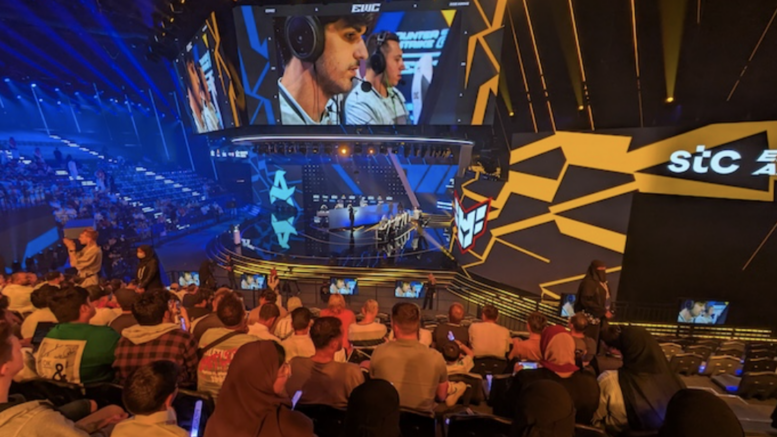
The Esports Nations Cup 2026 is introducing a different kind of international competition, one built around national representation instead of professional organizations. The event is positioned as the first global, recurring, multi-title national esports competition, with players competing for their countries in Riyadh in November 2026 rather than under club banners.
That shift changes the emotional and competitive logic of the tournament immediately. For the United States, it also creates a setting where talent depth, institutional support, and long experience across major titles could make the national team one of the strongest contenders in the field.
What the Esports Nations Cup 2026 Actually Is
The Esports Nations Cup 2026 is the inaugural edition of a country-based esports tournament organized by the Esports World Cup Foundation, and its format is fundamentally different from the club-centered structure that dominates top-tier competitive gaming.
The official event site describes it as a biennial competition in which the world’s best players compete for national honor, while the Esports World Cup Foundation announced it as a first global national team competition at this scale. That framing matters because it turns roster construction, eligibility, and national depth into central storylines rather than secondary branding details.
Why Team USA Enters as a Major Contender
The United States national team will be viewed as a major contender because nation-based esports rewards breadth as much as peak star power, and the American player base remains one of the deepest in the world across multiple competitive titles.
The published format points toward a broad, multi-title structure, with 16 games reported by industry coverage and national qualification pathways designed to populate large international brackets. In that environment, countries with established competitive ecosystems, strong infrastructure, and wide talent pools gain a major advantage.
The United States fits that profile, which is why any preview of the field begins with Team USA near the top tier of expected challengers.
Why the Americas Rivalries Matter So Much
The most compelling regional tension around the event could come from within the Americas, where the United States is unlikely to move uncontested. Brazil is already being discussed as a serious strategic force, with coverage highlighting a coordinated push involving major organizations under unified national leadership, while Canada has also surfaced in reporting around the emerging international race to build national representation models.
Those developments make the Americas bracket feel more layered than a simple United States-versus-everyone setup. A country-based tournament naturally amplifies regional pride, and that gives every U.S. matchup against Brazil, Canada, or another emerging nation more symbolic weight than a standard club event.
How the Nations Cup Reflects a Broader Shift in Esports

The Nations Cup represents a structural change in esports because it pushes the scene toward country-based competition at a time when most elite events are still built around organizations, franchise systems, and publisher-led circuits.
Qualification details reported for the inaugural edition include a blend of direct invites, online qualifiers, and broader representation mechanisms, while the official framework recognizes 200-plus countries and territories. That design signals an attempt to create something closer to an international sporting calendar than a normal tournament weekend.
Analysts have noted that though limited, some theScore Bet promo lists offer an Esport market focused on major international competitions championships and global events, reflecting the growing mainstream attention around competitive gaming.
The Format Makes National Depth More Important Than Ever
The tournament structure increases the value of national depth because the Finals stage is expected to include between 24 and 48 national teams in team-based titles and between 32 and 128 players in solo competitions, depending on the game. Each country is limited to one official national team per team-based title and up to two representatives in solo events.
That means roster decisions become strategic expressions of national identity and competitive philosophy. Countries cannot simply import organizational chemistry from a club lineup in every case and assume the format will do the rest. They need adaptable players, clear selection logic, and enough internal competition to build resilient teams.
Why Emerging Esports Nations Can Still Reshape the Field
Even with the United States positioned as a leading contender, the Nations Cup format leaves room for emerging esports nations to become disruptive forces. Open regional qualifiers and solidarity-style access mechanisms create pathways for countries outside the traditional power centers to reach the event, and that matters because country-based tournaments often generate different motivational and tactical environments than organization-driven play.
A nation that lacks global club prestige can still build momentum through cohesive selection, strong title specialization, and a clear identity. For Team USA, that means the road through the Americas and beyond may be less about surviving one superpower rival and more about navigating a field where national representation can unlock unexpected competitive intensity.
What the 2026 Event Could Mean for Future International Esports
If the Esports Nations Cup succeeds, it could push esports further toward a dual identity: one ecosystem driven by professional organizations and another energized by national competition. The official site already frames the project as recurring rather than one-off, and industry coverage has treated it as a potentially permanent addition to the global calendar.
For the United States, that would make 2026 more than a single tournament run. It would be the first chance to define what Team USA means in a multi-title international environment and to establish a benchmark against Brazil, Canada, and the rest of the field before national esports competition becomes a larger and more regular part of the global scene.




Be the first to comment on "The Battle for the Americas: Everything You Need to Know About US National Team for the Esports Nation Cup"