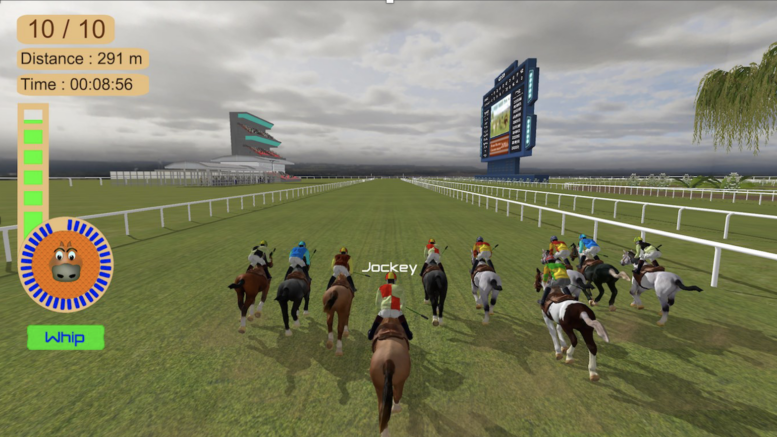
Most people think that horse racing games are simple. You just pick a horse, press a button to sprint at the right moment, and that’s it.
But good horse racing games, especially the ones that simulate the entire horse racing industry, are much harder. Yes, the races might look simple and repetitive, but underneath the surface, you’re managing a stable, breeding horses, thinking about bloodlines, and managing horses’ abilities by training, and in some games, you even have to think about the finances.
In fact, we’re talking about a sport that is much harder to simulate than football or basketball. There are so many moving parts, and the most difficult thing is not to overwhelm the players with thousands of features right after they launch the game.
So, how do developers actually simulate something as complex as horse racing? Let’s find out.
It Starts With the Same Problem as Real Racing
Before developers can even touch the mechanics, they have to deal with one big issue that can make or break the game. Horse racing as a sport is unpredictable, and that’s why it is so entertaining.
In real life, you can analyze data all day and still get completely unexpected results. That unpredictability is part of the DNA of the sport.
Let’s take a big race like the Preakness Stakes, for example. Some of the fastest horses from all around the world get to participate here, and it is very difficult to predict the winning horse because they are all good. Yes, by using betting strategies and deep analysis, you can narrow down your choice and maybe improve your winning chances, but the unpredictability is still there.
To learn more about betting strategies on the Preakness Stakes, click the link below: https://www.twinspires.com/preakness-stakes/betting/
So, if a game is totally random, it feels unfair, and if it is too predictable, it gets repetitive and boring.
Therefore, the first challenge that developers face is striking a balance. They need to create a system that feels realistic, without making the players feel like the outcomes are completely out of their control.
And honestly, that’s harder than it sounds.
Speed Isn’t Just Speed (It’s a System)
When we’re talking about the speed figure in horse racing games, it’s a bit more complicated than it sounds. Speed isn’t just a number, and there are multiple variables.
Game developers have a lot to consider when it comes to speed. They need to worry about speed, acceleration, track conditions, positioning, and even more variables. Horses might struggle at the beginning but finish strong, or the other way around.
This is exactly like the real world of horse racing. That’s why good games don’t just simulate how fast a horse can go, but they simulate when the speed is useful. Honestly, there aren’t many horse racing games that go to this extent, but the ones that do definitely feel more like the real deal.
Stamina Is What Actually Decides Races
Stamina is part of every horse racing game, from the modern ones back to the ‘90s retro horse racing games. You have a limited stamina bar, and you can go all out from the start and lose momentum in the final stretch or balance it for the entire race.
We’ve all made this mistake when playing a horse racing game. We smush the buttons as fast as possible, only to be overtaken by everyone.
When we’re talking about horse racing simulations, stamina is probably the most important variable. This determines how long a horse can maintain speed and how quickly it recovers from pushing hard.
Good games don’t just show a stamina bar and call it a day. They usually tie it to decisions, when you accelerate, how aggressively you ride, and how you position your horse in the pack. In a game, every choice you make should lead to a different outcome.
Positioning Is Where Skill Comes In
Rookies think it’s all about speeding through the track, and they don’t usually worry about their position. In real races, positioning can make the difference between winning and losing. If you’re boxed in, running too wide, or getting stuck behind other horses can completely change the outcome.
Good horse racing simulation games try to replicate this. Yes, most of them aren’t perfect, and many don’t take positioning into account, but the ones that do create a more authentic experience.
AI Horses Are Not Just “Faster or Slower”
One of the most underrated parts of horse racing simulations is AI behavior.
It’s easy to make opponents faster. It’s much harder to make them feel real.
If we’re talking about a good simulation game, AI horses should have different personalities. Some should start strong and fade as the race unfolds, or if developers want to take it to the next level, they should add dynamic AI thinking based on the race outcome.
This will create more randomized races and a more dynamic experience, just like in the real world.
Timing Mechanics Make or Break the Experience
If there’s one thing that separates average horse racing games from good ones, it’s timing.
Not just pressing a button, but pressing it at the right moment.
When do you push forward? When do you hold back? When do you make your move?
These decisions are often built into simple mechanics like stamina boosts, whip usage, or pacing systems, but they create depth.
Sadly, there aren’t many horse racing games that take all of these things into account. Why? Well, all of this is hard to create, and it requires time and money. Since horse racing games aren’t really mainstream, developers usually work with limited budgets.
Hopefully, we’ll see more horse racing games in the future that capture the real, authentic experience of the horse racing industry.