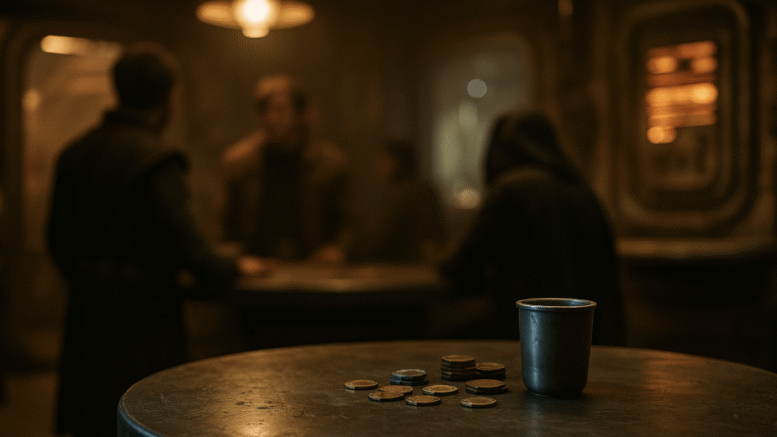
Sabacc appears whenever Star Wars needs tension without a firefight. A single hand can decide who leaves a cantina with a starship or who walks out owing a dangerous favor. Poker creates the same kind of pressure in our world, where players read the table, guard their chips and make choices that carry real consequences. Put the two together, and a pattern emerges that feels very human. Both games turn cards, risk and nerve into a contest of judgement, and the way characters behave around a Sabacc table often echoes how real players handle a high pressure poker hand.
Hand Value At The Core Of Both Games
The quietest moment in any card game arrives when a player looks down, counts their cards and realizes that nobody else yet knows what they are holding. Sabacc and poker both build their drama on that private check. In Sabacc, players chase a target total. In poker, they build recognised combinations. The scoring systems do not match, yet each one asks the same basic question at the start of a decision: what do these cards truly amount to right now?
Because of that, every new card lands with weight. A Sabacc hand that edges toward the ideal total carries the same tight feeling as a strong but vulnerable poker holding. Neither situation offers full clarity. Players work with incomplete information, trace possible outcomes in their minds and try to decide whether what they are holding can stand up once the cards are revealed. Around both tables, the person who judges that hidden strength more accurately than the others gains a lasting edge.
Stay In, Fold Out, Or Push Hard
At a serious poker table, a familiar pause appears again and again. A player sits with cards in front of them, looks at the pot, remembers how the betting has gone and knows they are about to choose between three paths. Quietly call and stay in. Fold and give up on this pot. Raise and force everyone else to decide whether they believe the story that is being told.
Sabacc scenes follow this same fork, even if the names of the moves change. Characters weigh what they stand to gain against what they risk losing in that moment. Tight minds let hands go early and wait for cleaner odds. Ambitious ones test opponents with pressure whenever they sense uncertainty. Players looking to sharpen this kind of decision-making often rely on online poker options for American players, or similar resources available in their countries.
Seen through that lens, a Sabacc exchange in Star Wars stops being a mysterious flurry of cards and credits and becomes a familiar crossroad where one choice keeps everything contained and another choice drags everyone into a confrontation.
Money On The Table Changes Every Decision
Credits in Sabacc scenes often arrive in gentle stages. A small stack appears at the start, then more counters join as confidence or desperation grows. Before long, the pile in the centre stands for far more than its plastic edges suggest. Those counters represent repairs, fuel, debts and, at times, a chance at freedom. Poker tables move through the same change when chips flow from private stacks into the middle. What began as a friendly game now carries rent money, savings or travel budgets in that growing mound.
Once a value leaves a player’s stack and joins the pot, every card matters more. A marginal hand that seemed worth a light gamble at the start can quickly feel reckless when the pot has grown into something life-changing. Some people tighten up and refuse to risk what is already in the middle. Others chase losses or lean on tiny edges because they cannot face backing down. When Lando risks the Millennium Falcon in Sabacc, he faces the same mental weight as a poker player who pushes in the last of their chips. The numbers do not match, yet the strain on that decision will feel instantly recognisable to anyone who has ever risked more than they felt comfortable losing.
Bluffing As A Shared Language
Han, leaning back with a weak hand and a confident look, captures another link between the two games. Bluffing in card play is not only a stunt or a dramatic shout across the table. It works more like a language. A raise tells one kind of story. A cautious check tells another. Silence, sudden interest in the cards, even the choice to look down rather than at an opponent, all contribute to that story. People at the table read those signals and quietly decide whether the story deserves trust.
When practiced in strategic games, bluffing leads to what scientists call interpersonal brain synchronization, a concept that implies players simultaneously putting mental effort into understanding each other’s intentions. A study that tracked players during a bluff game found that, when the bluff began, part of their brains called the dorsomedial prefrontal cortex, responsible for social reasoning, decision making and evaluating choices, became more active. This shows that a bluff in poker or Sabacc is not just a confident act but a deliberate effort by the brain to understand, read and outthink the player on the other side of the table. With that in mind, pauses, bets and rechecks of the cards stop looking random. Each move invites the other player to draw a certain conclusion about hand strength, just as two experienced poker players test each other with raises and reraises until one story finally collapses.
Luck At The Start, Skill Over Time
Star Wars often uses Sabacc to show how quickly fortunes can turn. A drifter sits down beside a crime lord and, after a few dramatic hands, someone new holds the keys to a starship. That works on screen because random cards really can give an outsider the upper hand in a single game. Poker carries that same possibility. A newcomer can sit with a veteran and, with the right run of cards, take a pot that experience alone would never have granted them.
Time gradually changes that picture. In poker, players who learn odds, pay attention to patterns and keep their emotions steady tend to perform better over many games. They still lose hands. They still watch unlikely cards fall now and then. Yet their average results improve because they make fewer careless mistakes and waste fewer chips on hopeless situations. Sabacc, even with rules that shift between stories and sources, leans toward the same truth. Characters who treat the game as a craft, remember how others behave and manage their risk will not win every hand they play. They will, however, usually lose less during bad runs and gain more when the cards cooperate. Luck opens the door in both games. The longer someone stays at the table, the more that door rewards discipline instead of wishful thinking.
Conclusion
Sabacc may be fictional, and poker may carry centuries of real history, yet the behaviour around their tables feels surprisingly close. Players judge hand strength without full information, risk valuable stakes, face hard choices, bluff, learn and reveal their temperaments as the games unfold. The comparison does more than link two sets of rules. It explains why Sabacc scenes land so strongly for viewers who have never held those particular cards, and why poker stories about pressure, pride and sudden reversals feel right at home beside tales from a galaxy far away.