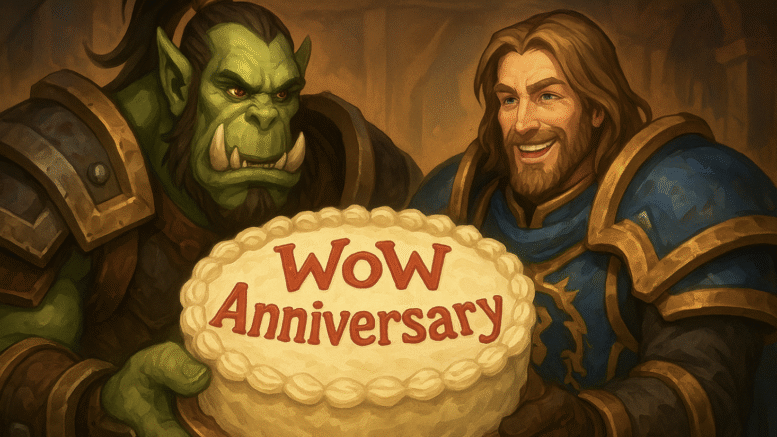
World of Warcraft didn’t use to be the sleek, optimized, and perfect rendition of itself it is today. Thankfully for those of us that like rough edges, World of Warcraft Classic exists.
With the approaching anniversary of the game, it felt important to take a look back at the biggest aspects that made the game feel like the most special MMO experience you could get back in the day. And after reading, why don’t you get a WoW Classic anniversary boost? Get yourself something nice with it to celebrate this great occasion!
The Pace Wasn’t “Too Slow” – It Was the Point
Leveling in Classic felt like hiking across a continent with a backpack full of snacks and your best friend arguing about loot rolls beside you. You weren’t trying to race anywhere. You were just… there, moving inch by inch through Azeroth, taking in the dusty roads of Westfall or the eerie glow of Tirisfal Glades.
Sure, the pace could drive you nuts. Mobs took forever to kill. Quests sent you jogging ten minutes in the opposite direction. A stray add could ruin your whole evening. But that friction created a strange warmth – almost like the game was asking for your attention, your presence.
Retail WoW makes you level like a jet pilot breaking the sound barrier. Classic? Classic made you walk. And walking made you look around.
Quests That Took You Three Zones Away and Back Again
Nothing says Classic leveling like a quest chain that starts with a guy near a wheat field in Westfall, continues in Redridge, and then sends you back to Stormwind to talk to a mage who only works one day a week.
Did it make sense? Half the time, no.
Did you do it anyway? Absolutely.
The quests design were sort of open in a way. You had to follow breadcrumbs to get to your destination, and half the time you would accidentally run into a camp of enemies whose level was way too high for you to deal with!
There’s something charming about that messiness. It felt handmade… because it was.
Running Out of Mana, Food, Arrows… Basically Everything
Ask anyone who leveled a Priest, Mage, or Warlock in Classic, and you’ll see the same half-smile, half-trauma expression float across their face.
Drinking after every two pulls. Eating after three. Running out of wand charges. Running out of reagents. Running out of bag space. Running out of patience.
Hunters? They had to feed their pets like cranky toddlers. Warriors fell apart without rage. Rogues used poison that required farming plants like some kind of medieval apothecary.
But these limitations made the classes feel human – rough around the edges, resource-hungry, and real. You weren’t a superhero. You were a scrappy adventurer scraping by.
The scarcity made each victory sweeter.
Travel That Made the World Feel HUGE
The first time you ran from Ironforge to Menethil Harbor… wow. You might’ve thought you’d taken a wrong turn and ended up in a different game entirely.
Travel in Classic was slow – really slow. No flying. Limited flight paths. Mounts at level 40 and expensive as hell. Every journey felt like a commitment. But man, did it give Azeroth weight.
Today? Zones zip by like they’re on fast-forward. Back then, you remembered the roads, not just the destinations.
Players Actually Talked to Each Other
Classic leveling wasn’t something you could do completely alone. You needed groups. You needed buffs. You needed that stranger who was also knocking out the same Defias quest.
And because the world was tougher, people helped each other more. Buffs were passed out like candy. Someone dying nearby was everyone’s problem. You’d band together with total strangers for a short quest and somehow end up leveling together for hours.
You intended to do a couple quests, and suddenly it was 2 in the morning!
The game didn’t have social systems built into menus. The world itself forced people to connect.
That Feeling When You Finally Hit Level 30, 40, 50…
Let’s be real: in Classic, every milestone level felt like a holiday.
Level 10? You got your first class quest.
Level 20? Mount envy began.
Level 30? You could finally do things without dying instantly.
Level 40? The mount. The glorious mount.
Level 60? You’d climbed a mountain – slowly, breathlessly, stubbornly – and the view felt incredible.
Modern leveling gives you a dozen shiny gifts every hour. Classic leveling gave you effort. And effort made the rewards actually matter.
Your first mount wasn’t a handout. It was a long-term savings plan.
Buying it felt like winning the lottery.
Danger Lurking Everywhere – And Not Always at Your Level
Classic zones didn’t care what level you were. Wandering too far off the road in Stranglethorn Vale could get you flattened by elite trolls. Running through the Wetlands as a low-level Alliance player? That was a survival game before survival games were a thing.
And let’s not forget:
Murlocs.
Agroing one was bad.
Agroing a pack was a crime punishable by corpse run.
The danger gave the world personality – sometimes cruel, sometimes funny, always memorable.
Corpse Runs That Tested the Limits of Your Patience
There was nothing quite like realizing your corpse was deep inside a cavern, behind six respawned mobs, around three impossible corners.
You’d sit there staring at the screen, silently negotiating with yourself:
“Do I really need this quest?”
“Is it worth another death?”
“…will my guild make fun of me if I give up?”
Even though it was frustrating in the moment, players remember those corpse runs with weird fondness now. They were part of the tapestry of the world, the little tragedies and triumphs that made the game stick in your memory.
The Music, The Ambience, The Feel
Close your eyes and you can probably still hear:
- Elwynn Forest’s gentle strings
- Durotar’s dry, humming winds
- Teldrassil’s mystical, haunting night music
- The eerie hum of the Ghostlands (for later Classic versions)
Leveling wasn’t just about grinding. It was about soaking in the world – its soundscapes, its light, its textures. Classic never felt rushed. It felt like a living place.
Strangers Who Became Friends Because the Game Slowed You Down
Maybe the best part of Classic leveling wasn’t the grind at all – it was the people.
You’d group with someone for a quest.
Then again for another.
Then again the next night.
And before you knew it, you had:
- A leveling buddy
- A future guildmate
- A friend you’d talk to for years
That kind of friendship doesn’t come from speed-leveling. It comes from shared struggle – from those late-night runs, those unexpected elite spawns, those long flights where you’d chat because there was literally nothing else to do.
Classic’s slow pacing wasn’t an inconvenience. It was the glue.
Wrapping Up
Back then, leveling felt normal – it was just how the game worked. We didn’t know it would become the nostalgic heart of WoW, the part players would long for after the world sped up, streamlined, and smoothed out.
Today, when players talk about Classic, the raids get mentioned… but the leveling journey gets remembered.
And now, with another anniversary coming up, it hits even harder: those quiet nights in the Barrens, those long trips across continents, those slow, painful, wonderful levels – they were moments we’ll probably never recreate exactly. However, if the grind was something that you never really liked, you can get WoW Classic 20th anniversary services and skip it entirely.
But remembering them? That’s its own kind of magic.
FAQs
Why did leveling in WoW Classic feel so slow?
Classic’s slower pace was very much deliberate. It made every change to your character feel a lot more meaningful. However, nowadays if you want to skip the grind you can resort to WoW Classic 20th anniversary services to get you all the gold you could need, among other things.
Was Classic leveling actually harder than it is today?
Yep. Fewer abilities, long downtimes, and dangerous zones made progress feel earned instead of handed out.
Why do players remember the leveling journey more than endgame?
Because leveling was where the memories happened – random groups, tough quests, road trips across zones. It was the soul of the game.
What made Classic zones feel so immersive?
Slow travel, distinct music, and real danger. You couldn’t sprint through zones, so the world actually stuck with you.
Did certain classes level faster than others?
Definitely. Hunters and Warlocks breezed through. Warriors and Priests struggled. These differences gave each class its own story.
Why did Classic players talk to each other more?
You needed help. Elite quests, dungeons, buffs – grouping wasn’t optional. The world encouraged (and sometimes demanded) teamwork.