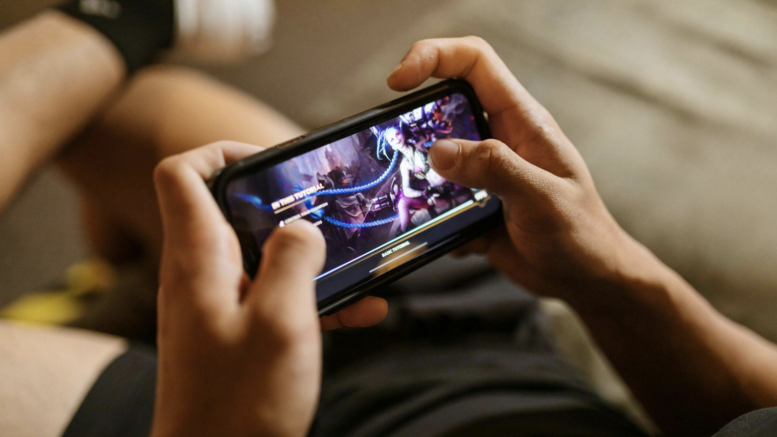
Most mobile RPG players do not think of themselves as gamblers. They think of themselves as strategists, roster builders, min-maxers. Yet the games they spend hundreds of hours in are built on mechanics that casino designers refined long before smartphones existed. That is not a coincidence, and it goes a long way toward explaining why the move from mobile RPGs to social casino platforms tends to feel less like a genre switch and more like a natural next step.
The progression makes sense once you understand what the two formats actually share at a structural level. It is not the theme or the visuals. It is the underlying system that keeps players engaged session after session.
Where the Mechanics Come From
The core loop of a mobile RPG, complete an action, receive a variable reward, repeat, is lifted almost directly from casino game design. The unpredictability of what you get, and when, is not a bug in the system. It is the system. Variable reward schedules produce stronger habitual engagement than fixed ones, and both formats exploit that principle deliberately.
This is well-established in behavioural research. The American Psychological Association has documented how unpredictable reward timing sustains engagement far more effectively than predictable patterns. Slot machines have used this since the mid-20th century. Mobile RPGs adopted the same logic for loot drops, shard pulls, and character banners. Players moving between the two formats are operating in familiar psychological territory, even if the surface looks different.
The Free-to-Play Bridge
One of the clearest structural overlaps is the entry model. Social casino games cost nothing to start. Players receive virtual coins or chips and play with those, with no real-money stakes involved. Mobile RPGs have run on exactly this model for years.
In Star Wars: Galaxy of Heroes, you do not pay to play. The economy is built around time, attention, and optional purchases layered on top of a free foundation. Social casino platforms follow the same logic. The genres differ, but the player’s relationship to the economy is nearly identical. Someone who has navigated free-to-play mechanics in an RPG context already understands the rhythm instinctively.
Social Layers Built on the Same Blueprint
Guild systems reshaped mobile gaming. The ability to coordinate with other players, compete on leaderboards, and participate in time-limited events gave titles like SWGOH staying power that solo-play games rarely achieve. Social casino platforms have been building the same infrastructure for the same reasons.
Leaderboards, friend gifting, and live tournaments are now common features across the top social casino sites, and they function in ways that mobile gaming communities recognise immediately. Both formats arrived at the same solution independently: attach a competitive social layer to the core game, and retention improves dramatically. The player stepping from an RPG guild into a social casino tournament is not adjusting to something new. The structure is already familiar.
Session Design That Fits the Same Window
Mobile RPGs are built around short, repeatable sessions. A quick battle, a mod upgrade, a daily energy spend; each fits a 5- to 15-minute window without demanding a longer block of uninterrupted time. Social casino sessions are designed to the same specification.
This is not coincidental. Both formats compete for attention in the same environment, against the same distractions, on the same device. Shorter sessions lower the barrier to daily engagement and make it easier for players to maintain a habit without the game dominating their schedule. The cognitive load is calibrated to match too: present enough to feel engaging, light enough to run alongside other activities.
The Collector Instinct Carries Over
Collection is one of the most consistent motivators in mobile RPG design. Building out a full roster in SWGOH, completing a gear tier, locking in a specific mod set; these goals pull players back across hundreds of sessions. The drive to accumulate and complete is deeply embedded in the format.
Social casino platforms tap into the same instinct through seasonal collectibles, themed unlock sequences, and character-based game variants. A player who understands what it means to grind toward a specific SWGOH mod configuration already knows how to pursue a long-term in-game goal across many short sessions. That patience and goal-orientation translates directly into the social casino context.
Competitive Tension Does Not Need Real Stakes
Players who try social casino games for the first time are often surprised that the tension holds even when the chips are virtual. The reason is simple: the competition itself is real. Leaderboard positions, tournament finishes, and head-to-head results carry genuine weight regardless of whether any real money is involved.
Mobile RPG players understand this intuitively. The resources in SWGOH have no cash value, but no serious player treats them as meaningless. The investment is emotional and competitive, and that does not change when the format shifts. Experienced mobile gamers tend to bring the same focus to social casino tournaments, and the transition is usually smoother than they expect.
The progression from mobile RPGs to social casino platforms is natural because the distance between them is shorter than it appears. The reward structures, the session design, the social competition, and the collector mechanics all trace back to the same design principles. Players who have spent serious time in one format have already been trained by the other.