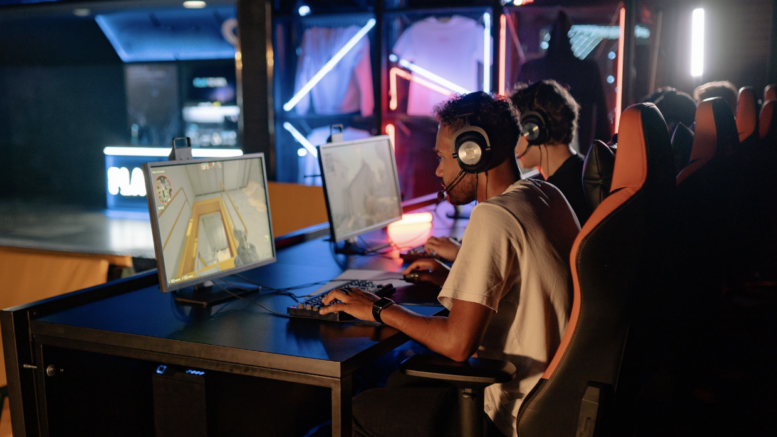
Multiplayer gaming has always run on strangers finding a way to connect in real time. Long before ranked queues existed, players squeezed into basements and rented halls for LAN parties just to sit next to the people they were playing with. The appeal was never only the match itself. It was the shoulder to shoulder chatter, the trash talk, and the shared adrenaline of a clutch round witnessed by someone sitting right there in the room.
That instinct for real-time human contact did not disappear when gaming moved online, it just changed shape and reached into corners of the internet that had nothing to do with games at all. Text chat gave way to voice comms, quick play modes normalized pairing with total strangers, and random matching tools built for entirely different purposes ended up solving the same basic problem gamers had been chasing for decades: how to feel like you are talking to a real person instead of a screen name.
Random Matchmaking Brought Strangers Into the Loop
Ranked queues and quick play modes made something feel normal that would have seemed strange a decade earlier, being paired instantly with a stranger and trusting the system to make it work. That same instinct shows up well beyond gaming. Text-based chat rooms gave way to webcam platforms built entirely around random pairing, and eventually to services that let two people talk face to face within seconds of clicking a button.
Platforms such as LuckyCrush trace back to that same appetite for instant connection, growing out of the wave of video calls through Umingle and other random-matching chat sites that once filled a role similar to what Discord voice channels fill for gamers today. The mechanics differ, matchmaking for conversation instead of matchmaking for a five person match, but the underlying idea, pairing strangers in real time and letting things unfold from there, is nearly identical to what ranked matchmaking has done in gaming for years.
LAN Parties Set the Template for Real-Time Connection
LAN parties were noisy, cramped, and often ran until sunrise, but they taught an entire generation what it felt like to compete alongside people instead of just against a screen name. Reading a teammate’s face during a close round, hearing someone groan after a missed shot, and celebrating a win together in the same space set expectations that online play would spend the next two decades trying to match. Before broadband made online play the default, being in the same physical room was the only way to get that kind of real-time connection at all.
Early online multiplayer tried to fill that gap with text chat, which worked well enough but stripped away tone, timing, and personality. A joke could land as an insult. A callout could arrive a beat too late to matter. Something was clearly missing from the experience, and the industry spent years chasing a fix that eventually arrived in the form of voice.
Voice Comms Turned Strangers Into Squads
Programs like Ventrilo and TeamSpeak were among the first real attempts to close that gap, letting clans coordinate raids and matches using actual voices instead of typed callouts. A stranger matched into a five-person team suddenly sounded like a person rather than a username, and coordination improved almost overnight because timing-sensitive callouts no longer had to be typed out mid-fight. Skype filled a similar role for smaller groups who wanted to stay on a call for an entire evening of co-op play, long before any of it was built specifically with gamers in mind.
Discord eventually absorbed most of that function and then expanded it, turning voice channels into always-on hangout spaces rather than tools reserved strictly for organized play. The same reflex shows up when something goes wrong. A major multiplayer title stutters for a few minutes, and its Discord fills up with people trying to figure out if the servers are actually down or the problem is local, the same troubleshooting instinct that used to happen over voice comms during a stalled LAN match years earlier.
Video Is the Next Layer, Not a Replacement
Streaming already proved that gamers are comfortable being watched and heard while they play. Twitch built an entire economy around it, and co-op sessions on Discord increasingly include a video feed running alongside the game itself, letting teammates read each other’s reactions the same way LAN party regulars once did across a folding table, years before webcams were a common household item. Even spectators expect a live feed now, whether it is a friend watching over a shared screen or a stream chat full of strangers cracking jokes in real time as the match unfolds.
That said, video has not replaced voice or text, and it probably will not. Instead it sits alongside them as one more option depending on the moment, useful during a relaxed co-op session with close friends, unnecessary during a competitive ranked match where focus matters more than face time. Gaming communities have generally been good at layering communication tools rather than swapping one out for another, which is why community-run servers and custom game modes still lean on text callouts even when voice is readily available, and why some players will happily hop on video for a casual session but mute the camera the second a ranked match starts.
None of this technology exists in a vacuum. Every step, from LAN parties to voice comms to random-match video platforms, answers the same basic want: talk to another person in real time without waiting on a lag or a loading screen. Gaming communities pushed that want forward for decades, often ahead of tools built specifically to solve it elsewhere on the internet. Whatever comes next, whether it is better voice detection, seamless video overlays, or something nobody has built yet, it will almost certainly follow the same rule the hobby has followed since the first LAN party: the connection matters just as much as the game.