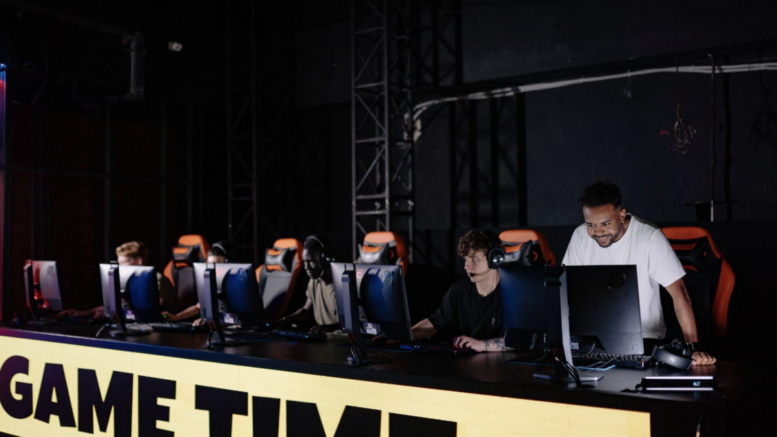
Anyone who has spent a season building squads in Galaxy of Heroes or lining up an alliance war roster in Marvel Strike Force already understands the core idea behind team shooters. Individual strength matters, but the real gains come from how the pieces fit. CrossFire, the long-running free-to-play shooter from Smilegate, is a good example of the same thinking in a very different wrapper. Its flagship ranked mode hands each side a clear job, punishes lone-wolf play, and rewards teams that talk, plan, and cover each other. Many of its habits translate straight back to mobile team games.
Two sides, two different jobs
In Search and Destroy, the 5-on-5 ranked mode, the teams are not mirror images. The Black List side attacks, and either eliminates the opposition or plants a bomb at one of two points and protects it until it detonates. The Global Risk side defends, winning by stopping the plant, disarming the bomb, running out the clock without a plant, or eliminating the attackers.
Anyone who has run territory battles will recognize the shape of that arrangement. One side must take initiative and commit, while the other must read the situation and respond. Attackers who rush without a plan give up numbers, and defenders who sit passively let the clock work against them.
Why the competitive scene is built on teams
That team focus carries into the tournament scene. Smilegate shared a timeline of the CrossFire Stars circuit showing CFS launching in Shanghai in 2013, becoming an annual event in 2014, and adding an Invitational in Brazil and Vietnam in 2015. By 2021, a Vietnamese squad, CELEBe.2L, was reaching the semi-finals by beating established teams from other regions, a reminder that coordination can close gaps that raw reputation cannot.
That is why anyone trying to read the scene properly, whether as a casual viewer or someone participating in crossfire betting, ends up needing the same basics: which regional league a squad came through, how a group stage feeds into the semifinals, and how a team’s form travels against opponents from other regions.
Those basics are easy to see in the numbers. The 2025 Grand Finals, for instance, includes 16 squads in Chengdu that qualified through regional leagues: four from China, three each from EUMENA, Brazil, and Vietnam, two from the Philippines, and one from North America. The game itself is available in more than 80 countries, so the finalists emerge from a very wide field.
Communication is the real power-up
Players should communicate constantly, even with strangers, and remember to call out any enemy they have damaged, so teammates know a single shot will finish the job. Friendly fire is on, so teammates must avoid shooting each other, and because players cannot pass through each other, blocking a doorway can sink a plan. The advice on conduct is just as practical. Stay until the match ends even when losing, since leaving early brings a temporary ban and lost ranking points; keep your temper in check; and try to lift team morale instead of lecturing random players.
Strategy gamers know the same pattern from alliances. A guild that shares information quickly, keeps its members motivated, and avoids blame after a bad event outperforms one with stronger rosters and worse habits. CrossFire compresses that lesson into short rounds, which makes the cost of poor communication easy to see.
Preparation wins rounds before they start
The best teams do much of their work before a match even begins. Professional squads memorize set plays with defined roles and review their mistakes after scrimmages, much as other athletes study game footage. Everyday players can copy the habit by warming up in Deathmatch or Free for All, repairing weapons, checking loadouts, learning each map, and bringing the grenades they need. Smoke and flash grenades act as tools for controlling the map as much as weapons, which is a neat parallel with the way support characters in a squad shape a fight without dealing most of the damage.
Queuing with friends you already work well with pays off in the same way. Experienced players of team-building games will hear an echo of the old advice to build around synergy rather than chase the highest individual stats. A squad you understand deeply will usually outperform a pile of strong parts that have never been tested together.
Discipline at the objective
Some of the most useful lessons concern what happens after the main objective is achieved. Before planting, check all corners of the planting spot. While planting, keep the bomb in view in case someone tries to disarm it. After planting, split up to cover every side, which also makes it harder for the other team to take out the whole group at once. If you are the last player alive, stay at the spot for several seconds after planting before leaving, or the bomb may be disarmed.
Every one of those habits is about not wasting a hard-won advantage. Strategy players know the feeling of winning a raid phase and then losing the event through carelessness in the final stretch. CrossFire’s habits of covering angles, staying near the objective, and spreading out for resilience are a good checklist for any game where a lead has to be defended.




Be the first to comment on "What Strategy Gamers Can Learn From CrossFire’s Team-Based Tactics"